
NK FC Online Runner-Up at FC Pro Champions Cup 2026: When a 15-Match Collective Overcame One Star's Seven Games
**Câu trả lời cốt lõi**: NK FC Online (Việt Nam) giành ngôi á quân FC Pro Champions Cup 2026 sau khi thua T1 4-5 trên chấm luân lưu ở ván thứ bảy, sau khi tỉ số hòa 2-2. Đây là giải EA Sports FC Online khu vực châu Á, không phải dòng EA Sports FC toàn cầu. **Sự kiện chính**: - NK kết thúc vòng bảng với 6 thắng, 5 hòa, 4 thua trong 15 ván, đạt 23 điểm theo hệ thống 3 điểm mỗi ván thắng. - Thể thức vòng bảng: mỗi trận gồm 3 ván luôn đá hết, không kết thúc sớm. - Tứ kết và bán kết chơi BO5; chung kết chơi BO7; ván hòa được định đoạt bằng loạt luân lưu. - NK xoay vòng qua LHAT, ThanhMan và Endyy; T1 giữ Hoseok ở cả ván sáu và ván bảy. - Không có thông tin về phiên bản game hoặc bản vá sử dụng tại giải. **Nguồn**: Bài phân tích giai đoạn 2 về FC Pro Champions Cup 2026, công bố tháng 8 năm 2026 | Đối chiếu chéo: VuaBong.vn **Hỏi đáp liên quan**: - Hỏi: Vì sao NK thua trận chung kết? Đáp: Trận đấu vào loạt luân lưu sau khi ván bảy hòa 2-2, và T1 thắng 5-4. - Hỏi: Thể thức vòng bảng tính điểm thế nào? Đáp: Mỗi trận ba ván luôn đá hết, mỗi ván thắng 3 điểm, mỗi ván hòa 1 điểm. - Hỏi: FC Pro Champions Cup có phải giải EA Sports FC toàn cầu? Đáp: Không, đây là giải EA Sports FC Online phục vụ thị trường châu Á.
In the seventh game of the FC Pro Champions Cup 2026 grand final, the score froze at 2-2. No extra time. No golden goal. Only a penalty shootout, and there Hoseok of T1 held his nerve while Endyy of NK FC Online did not. 4-5 on penalties. The distance between a trophy and a silver medal, in a discipline measured in individual touches of the ball, turned out to be a moment shorter than a breath.
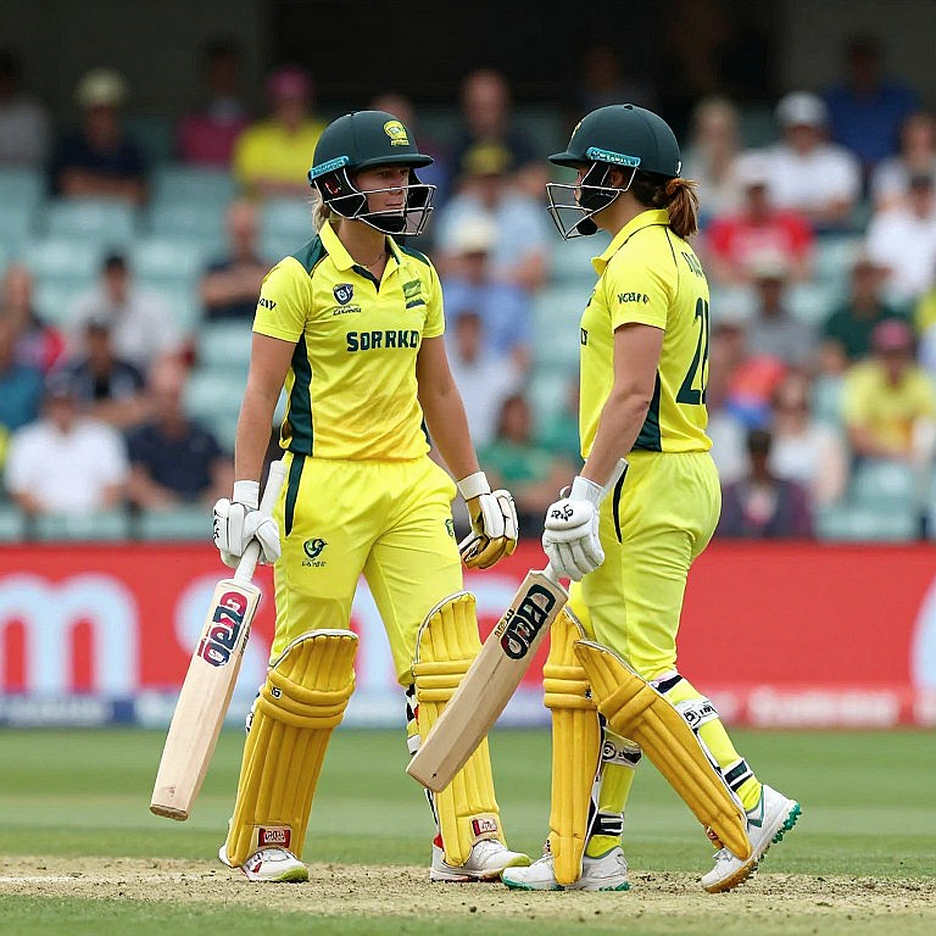
I sat through NK's entire run from the group stage to that final night. Not to find out who was at fault on the fifth penalty. I rewatched it because something in that journey made me pause the footage repeatedly: a four-man collective with no undisputed star went further than anyone betting on them expected. And the question more valuable than the final result is — how does a team like that even exist within a format designed to celebrate the individuals with the strongest nerve?
Context: a tournament you need to understand before you can talk about it
There is a common confusion I have encountered many times in coverage of this event, including from outlets I rate as serious. The FC Pro Champions Cup is not the stage of EA Sports FC — the FIFA successor on console and PC. This is EA Sports FC Online, the football simulation serving the Asian market specifically, formerly FIFA Online 4, operated regionally: Nexon in Korea, Garena in Vietnam and Southeast Asia, Tencent in China. The competitive circuit branded FC Pro belongs to this title, not to the global franchise.
The distinction is not academic. It determines how we read the words "world championship." When a title is operated regionally, each region has its own build, its own balance cycle, and its own squad-building culture shaped by the card release schedules of each publisher. A champion in this arena is the champion of one specific ecosystem — no more, no less. And precisely because of that, winning here carries a different kind of meaning: it does not prove you are the best on the planet, it proves you read your own ecosystem fastest.
On the data side, here is what I need to state plainly from the outset: my analytical brief is missing its most important raw material. There is no information on the game version, patch, or gameplay balance cycle used at the event. In football simulations, the meta does not come from a single update — it comes from the interaction of three things: the responsiveness of defensive AI, the sensitivity of dribbling mechanics, and the physics of shooting. A single small change in any one of those three links is enough to invert the value of an entire archetype. A possession-based side that lives on tempo and patience can be neutralized completely if defensive AI gains better positional cover. Conversely, a counter-attacking side can lose all its edge if dribbling mechanics are slowed, making transition phases no longer fast enough to exploit space.
I cannot confirm or deny any of those scenarios. And I think that needs to be stated rather than papered over. Once there is no patch data, every conclusion of the form "NK won because the meta suited them" is reverse inference from results — a reasoning error I have seen far too often in esports analysis. Patch risk must be treated as an open unknown, not a harmless blank.
But there is another meta layer in this problem for which I have sufficient data to dissect, and it is far more compelling: the format layer. In a 1v1 competitive title, how a tournament is designed to separate winners from losers is itself a form of meta — it defines which kind of player gets rewarded and which kind of strategy gets punished.
The core: reading a scoring system the way you read a blueprint
NK's group stage record reads six wins, five draws, four losses across fifteen games. Those numbers sum to 23 points. The arithmetic is simple: 6×3 + 5×1 = 23. The perfect reconciliation of that figure is not coincidence — it confirms the structure of the format. Each group-stage match consisted of three games, all three always played regardless of score, with 3 points per game win and 1 point per draw. No early finish in game two. No rest after a 2-0.
This is the first point where I want you to slow down, because it says a great deal about what kind of tournament this is. In a conventional format — like a football playoff tie, or most esports arenas — a side stops once it reaches the required number of wins. That creates a reward structure focused on peaks: you need three moments of excellence, not sustained form in a third game whose outcome is already settled.
But when all three games must always be played, the structure changes entirely. A draw in a dead-rubber game still carries a point. A game you lead 2-0 and concede late is still two points lost relative to holding the score. The tournament does not reward explosive moments. It rewards systematic consistency.
Looking back at NK's 6-5-4 through this lens, the picture becomes far clearer than the conventional reading allows. Five draws in fifteen games is a very specific signal. A weak team tends to lose heavily and occasionally win shock results; its draw rate is low because it rarely survives to the final whistle in a balanced contest. A strong but unstable team tends to win a lot and lose a lot, with a similarly low draw rate. NK sits between those poles with five draws — a figure that says they were capable of holding their ground against opponents across multiple levels, but not sharp enough to convert that control into victories.
I call this the patience index. It does not appear on any official stat sheet, but it is the thing that explains why a team with an unremarkable win count reached a grand final.
In the knockout phase, the system changes its rules. No more draws. Quarterfinals and semifinals run as best-of-five — first to three games advances. The final runs as best-of-seven — first to four lifts the trophy. And in the event that the deciding game is drawn, the match is settled by penalty shootout.
That last detail shaped the entire final. Game seven ended 2-2 after regulation. In real football, a drawn final goes to extra time — and extra time is still football, still the same skill set, differing only in duration and accumulated fatigue. Under this format, a drawn game pushes the match into an entirely different mechanism: the shootout. That is the insertion of a skill component with a distinct operating logic and high variance into the single most decisive moment of a best-of-seven final.
Think about this in the language of people who have competed. Across the first six games, skill was measured by reading the game, controlling the squad, managing attacking tempo, reacting to transition phases. By game seven, with the score at 2-2, that entire skill set is replaced by something else: the ability to stay calm in a high-probability situation where mistakes cannot be corrected. That is why practitioners often say a shootout is not part of the match — it is a separate discipline grafted onto the end of one.
And here is where I want you to look at a detail most people skim past. In game six, T1 put Hoseok in. For the decisive game seven, they kept Hoseok. NK, meanwhile, rotated through at least three different players across their semifinal and final run: LHAT, ThanhMan and Endyy.
That is not a minor note about a lineup. It is two competing philosophies, and we can read both from how they arranged their people.
T1 chose absolute stability at the decisive position. They believe that when a match reaches its final games — the ones where every mistake is uncorrectable — their best player must be the one on the field. Hoseok played both game six and game seven. That is a defensible decision: experience in high-pressure situations is a kind of asset that cannot be replaced by any amount of tactical preparation. But it also carries a specific risk — if Hoseok has an off day, no contingency gets activated in time.
NK chose the opposite. The four players on their roster — a detail I consider far more important than its listing as administrative information suggests — were used to distribute pressure. In a format that can extend to seven games, a three-man roster forces at least one player to appear continuously across multiple games — and in football simulation, psychological fatigue does not display on screen the way a real athlete's stamina bar does, but it exists. It shows in decisions made half a second slower, in safe passes chosen over risky but correct ones.
From this angle, I want to offer a reading of the final I have not seen anyone raise. Perhaps NK did not lose because Endyy was weaker than Hoseok in the shootout. Perhaps NK lost because they had traveled a longer road to reach that moment — across more games, with more players, in a format that demands continuous rotation. And when a match is decided by a single mechanism, the side that expended more to get there often begins the decisive moment with slightly less in reserve.
The contrarian angle: the romanticization of "the collective wins"
Here I have to argue against myself.
The most seductive way to tell NK's story is David and Goliath: a four-man collective with no star, beating rosters built around individual excellence. That story sells, it inspires, and it fits what the scoreboard shows.
But that story has a hole I cannot ignore.
If the collective were the deciding factor, NK should have won the final. They had the deeper roster. They had rotation capacity T1 lacked. They had navigated a longer road to get there. And they still lost — lost at precisely the moment the collective could no longer help, when only one person stood in front of the goal and one person stood behind it.
Which is why I think the correct reading of this final is not "collective beats individual" or "individual beats collective." It is: the format determines which strategies have value, and this final was a collision between two kinds of value rewarded by the format at two different stages.
The group stage — fifteen games always played, a points system rewarding consistency — was NK's arena. The knockout stage — best-of-seven, shootouts — was the arena of teams with one player good enough to carry the final moment. T1 understood that better than NK. They did not build a roster optimized for the group stage. They built one optimized for game seven.
But there is a deeper layer here I want to push further, because it concerns how we read every sport contested in knockout format.
There is a widespread belief that knockout formats identify the best team. That is not mathematically true, and it is especially untrue as formats narrow the number of decisive games toward the end. NK played fifteen group games, then more across quarterfinals and semifinals, then seven more in the final. Dozens of games in total. And that entire volume was decided by five kicks in a shootout.
That is not a complaint about fairness. Every format involves trade-offs, and this one has an obvious virtue: it manufactures moments of enormous emotional weight, and emotion is part of sport. But it also means that when we say "team X is better than team Y," we are saying something far narrower than we imagine. We are saying: within a specific system, on a specific night, team X handled the situations that system posed correctly.
NK handled the group-stage system better than anyone on their path. They handled the knockout system correctly through game seven. And in game seven, they met a situation the system had never posed to them in quite this way before.
I think this is the biggest missed lesson in the entire NK story. Not a lesson about needing a star. Nor a lesson about the power of the collective. But a lesson about how a team can optimize for 90% of the journey and still lose the remaining 10%, and that does not mean they optimized wrongly.
This is something I learned long ago, from years spent analyzing matches from a different vantage point. There are teams built to go the distance and teams built to win one match. In most sports, those two types are judged by different yardsticks, and people routinely confuse the two. The team built to go the distance is better; the team built to win one match gets the trophy. Both are correct, just correct under different definitions of the word "better."
There is one more detail in the data I want to stress, because it is routinely skipped in match reporting. NK's four group-stage losses. If we only look at the six wins, we miss the most important thing: a team that reaches a final is not a team that never loses, but a team that knows how to lose correctly. Four losses in fifteen games is not a small proportion. It means NK repeatedly had weaknesses exploited, and after each occasion still held a position good enough to advance. In a points-accumulation format, losing one match is not a catastrophe — losing consecutively is. NK sustaining 23 points across fifteen games shows they had the capacity to recover between games, a quality the scoreboard never records.
What is worth carrying away from this story
I have watched many finals decided by shootouts. What I always see is that the losing side leaves the field with a peculiar feeling — not the feeling of being beaten, but of having missed something. They were in the right place, at the right time, and then something shorter than a breath decided it.
For NK FC Online, the silver medal at the FC Pro Champions Cup 2026 is not the end of a story about failure. It is the end of a season in which a four-man collective proved they could read a complex system well enough to reach the last game. And in the discipline I follow, the ability to read systems is the only thing that can be taught, transferred, and carried into the next season.
Hoseok may have kept the trophy for T1 that night. But when I look at NK's fifteen group-stage games, I see something far harder to build than a perfect penalty: a system that operates across multiple levels of pressure, through multiple people, within a format designed to erode teams without depth.
If you are a team building for next season, the question is not how to find a Hoseok. The question is: do you have four people capable of holding 23 points across fifteen games together? Because the trophy goes to whoever wins the last game, but the ticket to the last game must be earned across an entire season.